Beginner 16 Week Marathon Training Schedule
(Step-by-Step Plan for First-Time Runners)
Last updated: March 3, 2026

This is a beginner 16 week marathon training schedule. If you are looking for a different option or length, see my guide to choosing a marathon training plan.
If you’re training for your first marathon, this beginner 16 week marathon training schedule will guide you step-by-step from base mileage to race day.
This plan is designed specifically for first-time marathon runners who can comfortably run 3–4 miles but have never completed 26.2 miles before.
Over the next 16 weeks, you’ll gradually increase mileage, build endurance safely, and learn exactly how to structure long runs, rest days, and recovery — without burnout or injury.
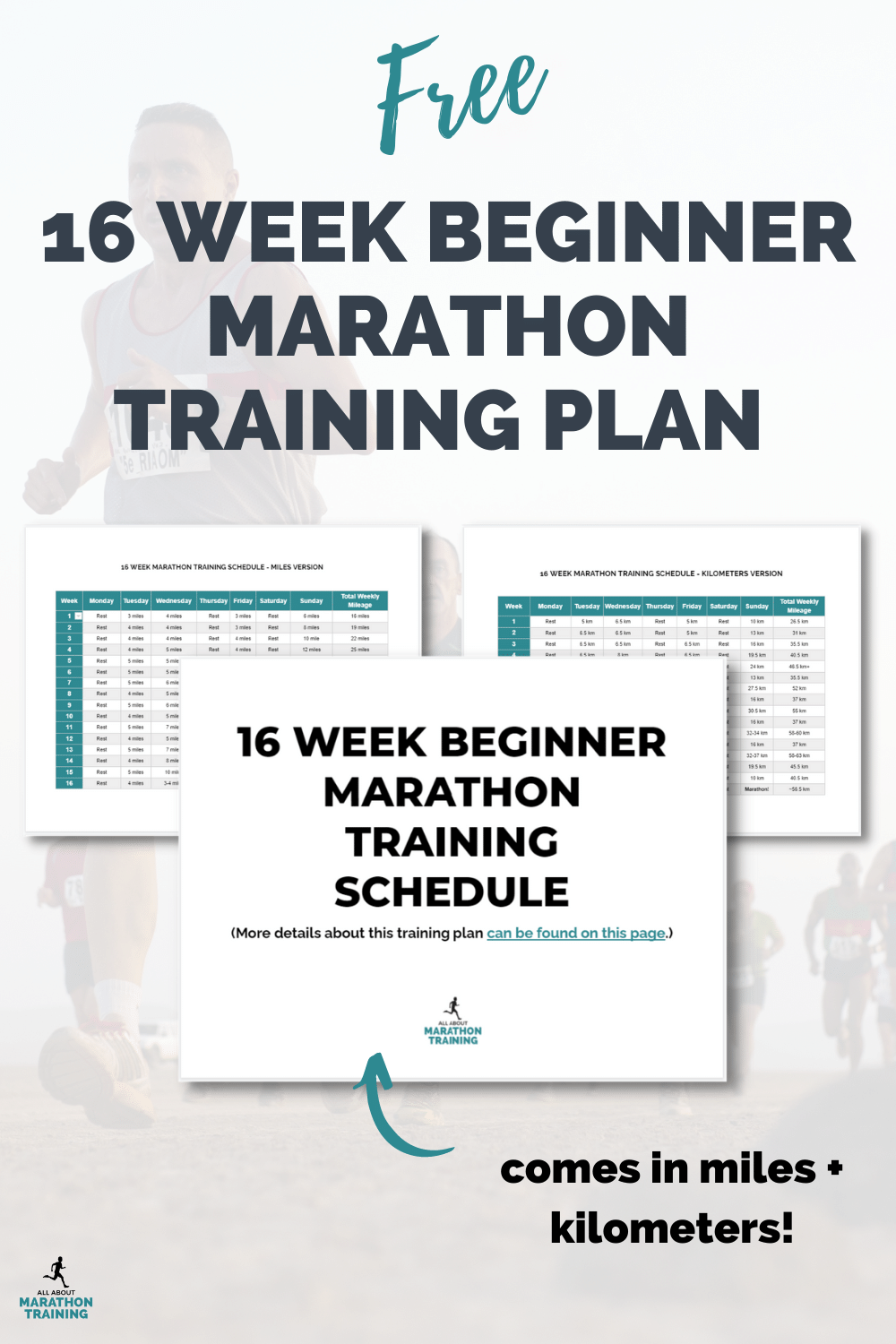
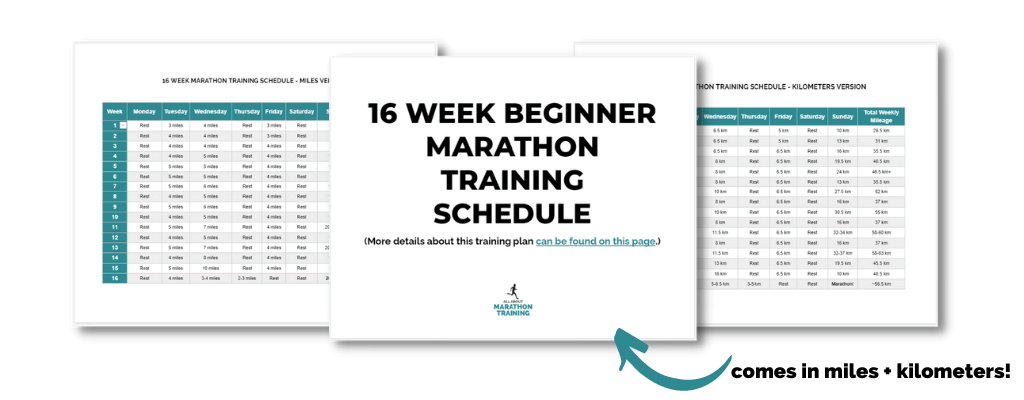
Grab your free printable 16 Week Marathon Training Schedule pdf download at the bottom of this page - it comes in both miles and kilometers!
Who this plan if for:
This 16 Week Marathon Plan Is For You If:
- You’ve never run a marathon before
- You can currently run 3–4 miles comfortably
- You want a structured weekly plan
- You prefer gradual mileage increases
- Want to avoid injury and burnout
16 Week Beginner Marathon Plan Overview
Looking for the metric version? View the 16 Week Marathon Training Plan in KM here.
- Duration: 16 weeks
- Peak weekly mileage: ~38 miles
- Longest run: 20–23 miles
- Runs per week: 4
- Cross training: 1 optional day
- Rest days: 2 per week
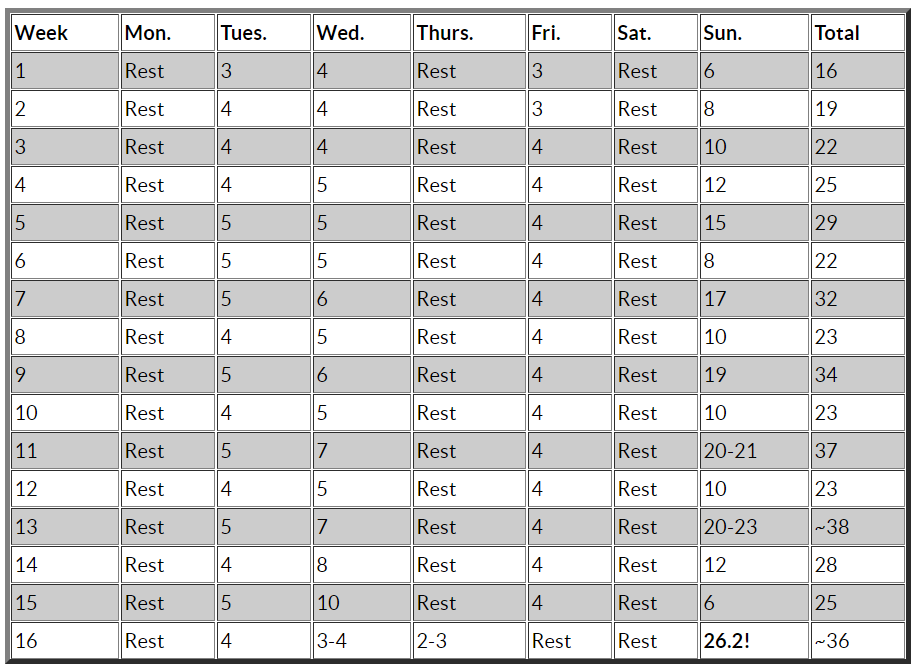
| Week | Monday | Tuesday | Wednesday | Thursday | Friday | Saturday | Sunday | Total Weekly Mileage |
|---|---|---|---|---|---|---|---|---|
| 1 | Rest | 3 miles | 4 miles | Rest or XT | 3 miles | Rest + MT | 6 miles | 16 miles |
| 2 | Rest | 4 miles | 4 miles | Rest or XT | 3 miles | Rest + MT | 8 miles | 19 miles |
| 3 | Rest | 4 miles | 4 miles | Rest or XT | 4 miles | Rest + MT | 10 miles | 22 miles |
| 4 | Rest | 4 miles | 5 miles | Rest or XT | 4 miles | Rest + MT | 12 miles | 25 miles |
| 5 | Rest | 5 miles | 5 miles | Rest or XT | 4 miles | Rest + MT | 15 miles | 29 miles |
| 6 | Rest | 5 miles | 5 miles | Rest or XT | 4 miles | Rest + MT | 8 miles | 22 miles |
| 7 | Rest | 5 miles | 6 miles | Rest or XT | 4 miles | Rest + MT | 17 miles | 32 miles |
| 8 | Rest | 4 miles | 5 miles | Rest or XT | 4 miles | Rest + MT | 10 miles | 23 miles |
| 9 | Rest | 5 miles | 6 miles | Rest or XT | 4 miles | Rest + MT | 19 miles | 34 miles |
| 10 | Rest | 4 miles | 5 miles | Rest or XT | 4 miles | Rest + MT | 10 miles | 23 miles |
| 11 | Rest | 5 miles | 7 miles | Rest or XT | 4 miles | Rest + MT | 20–21 miles | 37 miles |
| 12 | Rest | 4 miles | 5 miles | Rest or XT | 4 miles | Rest + MT | 10 miles | 23 miles |
| 13 | Rest | 5 miles | 7 miles | Rest or XT | 4 miles | Rest + MT | 20–23 miles | ~38 miles |
| 14 | Rest | 4 miles | 8 miles | Rest or XT | 4 miles | Rest + MT | 12 miles | 28 miles |
| 15 | Rest | 5 miles | 10 miles | Rest or XT | 4 miles | Rest + MT | 6 miles | 25 miles |
| 16 | Rest | 4 miles | 3–4 miles | 2–3 miles | Rest | Rest + MT | 26.2 miles (Race) | ~36 miles |
XT = Cross Training
MT = Mindset Training (My Mindset Training Plan for Marathoners will do the trick!)
What is the goal of this marathon training schedule?

As a beginner or even first time marathon runner, the goal of this training plan is to build your running volume and your endurance level.
Building your running endurance (how far you can run) is the ultimate goal of any marathon training plan.
However, when you start focusing on finishing a marathon within a certain time frame, the way that you train should be different than the way you would train if your goal was to finish the race in any time frame.
That is why this beginners training plan does not include speed, or hill training workouts.
Your goal in this training plan should be to accomplish the marathon in any time frame.
If you are looking for a training plan that will enable you to finish within a certain time frame I do have 7 other marathon training plans that are specific to finishing time goals.
How do I know if I'm ready for this 16 week Plan?
Before jumping into any training plan you should assess whether or not you are truly ready.
You're readiness can be subject to many different things.
some questions I recommend asking yourself:
- Do you have time to train?
- Are you in good health?
- How far do you run at week?
- How far are you comfortable running?
Before you begin this marathon training scheduel:
Be comfortable with running at least 4 miles.
Ideally, being able to run 5-6 miles would be perfect since your first scheduled long run is 6 miles during the first week of training.
If you can't physically run 4 to 6 miles yet you might consider waiting to begin this schedule and build more of a running base until you are more comfortable with that distance.
A good training strategy is to always start at the running level you are at.
You don't want to have force your body to run the 6 miles during that first week of training, become worn out and then struggling to keep up with the rest of the plan.
It is much safer for you to be comfortable running those distances and progress from there.
Therefore, if you aren't ready yet, wait and keep building up your endurance. On that note, here are 16 of the best things you can do before beginning marathon training that will increase your chances of success!
if you will be run/walking using this training plan...

I still recommend being able to run about 4-6 miles comfortably.
Run/walking a marathon is such a smart way to train for a marathon especially if you are:
- an older runner
- more susceptible to injury
- just recovered from a running injury
- feel overwhelmed by the idea of running the entire marathon
Here is a guide to run/walking using the Galloway Method!
How is this marathon training schedule designed?
This is a 16 week marathon training schedule for
beginner marathoners that is focused on building endurance.
As previously mentioned, there are no "fancy" workouts such as interval training, tempo runs, hill repeats etc. although these can definitely be added in if you are more advanced and this isn't your first marathon.
We'll talk about how to make alterations to this plan in a bit.
The main goal is to build running volume and mileage so that you are able to run and complete the marathon distance.
The key component in this plan is your long run which is the strongest determinant of your success!
Free Version
Just need the training plan?👇
How this beginner marathon training plan works:
Weekly Structure:
- Each week you will run 3 “easy” base runs and 1 long run.
- Rest days: Mondays, Thursdays (optional), and Saturdays
- Short, Easy Runs: Tuesdays, Wednesdays, Fridays
- Cross Training (XT): Thursdays
- Long Runs: Sundays
Long Run Progression:
- Your long run will increase by two miles in the weeks that an increasing long run is scheduled.
- Once you hit Week 6 of the marathon training schedule you will have a reduction in your long run miles to help your body get a bit more rest and recovery in before increasing your long run the following.
- Your highest mileage week will be around 38 miles in Week 13.
- Here's a 24 Hour Post Long Run Recovery Timeline to help you bounce back asap after a long run!
Reduction Weeks:
- During Weeks 6, 8, 10, 12, 14 your long run mileage will be reduced (and therefore your total mileage that week) to allow your body (and mind!) extra rest and recovery.
- This will help you to avoid burnout and injury while still building endurance at a steady, safe rate.
Taper Weeks:
- You will be doing a taper phase during the last 2 weeks of this schedule. Tapering allows your body to really peak of your marathon race day and if done can help enhance your performance. Here's more information on tapering for a marathon.
Optional Cross Training Days:

If you feel like you want to add cross-training on one of the rest days, then feel free to do so.
Here is a list of some of the best cross training activities you can do + ones to avoid.
I also have a compilation of my favorite cross training YouTube workouts on this page about cross training.
The one rule to adding cross training to this schedule is to not force yourself to do it if you are feeling exhausted or run down.
It is much better to focus on your running, especially your long run when training for a marathon than it is to get a cross training workout in once a week.
If you do choose to cross train then a good day to fit it into this plan would be on Thursday, in the middle of your training week.
Easy/short running days
Each week, (Tuesday, Wednesday, Fridays) you will perform 3 easy runs.
The goal of these easier, shorter training runs is to build your weekly running volume (your weekly mileage) and keep your body maintained and prepped for your long run on the weekend.
If you do feel the need to add in a quality workout once a week then schedule it for one of these shorter training days.
A good day to accomplish this would be on Tuesday or Wednesdays.
A good beginner quality run you could do on these days would be a tempo running.
You can find your guide to tempo running here.
Remember it is perfectly fine to stick to normal, easy paced runs on these days though.
Just get the miles in.
Other Running Workouts You May choose to Add onto Your Schedule:
Or here is a complete guide to Running Workouts that you might find helpful.
Long distance running days

First up, be sure to read this ultimate guide on running your best long runs!
Your long runs are the key elements of this plan!
You will perform a long run each week scheduled on Sundays.
Once you reach your 15 mile long run during Week 5 you will then have an alternating light week, or reduction week where your long run will be reduced to allow for extra recovery to occur before your next long run.
This will allow you to keep building your endurance without becoming too run down from performing long runs week after week.
During weeks 11 and 13 you have the option of going longer than 20 miles.
You may feel up to it and welcome the opportunity of boosting your race day performance and success.
However, if the long runs have been getting the most of you then stick to 20 miles.
I wrote on how far your marathon training longest run should be on this page if you are trying to find your sweet spot.
Extra Resources for Your Long Runs:
- Here are some tips for your long runs!
- A 24 hour post long run recovery timeline: things you should include to help you feel your best as soon as possible
- What to eat before a long run
- What to eat during a long run
- What to eat after a long run
Can I switch my long run day?
If you need to run your long run on Saturday versus Sunday then simply shift everything by one day on the training plan.
For example, run your long run Saturday, your rest day Sunday and your run the first of your scheduled shorter weekly runs on Monday.
I'd love to send you a free pdf download of this marathon training plan!
It comes in both miles and kilometers!
What pace should beginners run?
As a beginner marathon runner, your pace during your training runs should be a conversational, easy pace.
Just like it sounds, you should be able to talk, or carry on a conversation while you run. Your perceived effort should be about a 5 or 6 on a scale of 1 to 10.
There is no need to push it past this.
If you want to find your true marathon pace see this guide.
For determining your long run pace, see this guide.
For a marathon pace calculator and chart see here.
How to avoid injury during marathon training
There is nothing as frustrating as training for months, logging miles, conquering long runs, and then winding up with a running injury and being forced to sit on the sidelines.
That is why this beginner 16 week marathon trianing schedule aims to build mileage at a slow and steady rate.
Other ways to reduce your risk of injury though are:
- Always warm up before running!
- Cool down properly with effective stretches after your run.
- Choose to perform strength training on your cross-training days if you are including them.
- Always recover properly after your long runs by taking active measures. Here is a 24 Hour Post Long Run Recovery Guide.
- Recover properly after your marathon! Here is your Marathon Recovery Guide!
What to Eat During 16 Week Marathon Training
You are going to be logging many miles during your marathon training.
Therefore, it's very important that you are giving your body the fuel that it needs to accomplish such a huge task.
I have written many articles on marathon nutrition that you can find on this page.
Here are some resources that I want to highlight for you as you work through this beginner 16 week marathon training plan:
- Your Complete Guide to Marathon Nutrition
- Race Day Nutrition Guideline: Before and After
- The Low Down on Carbo-Loading
- Prepare your meals ahead of time to stay on track!
- Meal Prep Ideas for the Week Before the Marathon
- Make Ahead Breakfast Ideas for Long Runs + Marathon race day!
don't forget about your hydration

One of the most important factors of your training!
Without the proper fluids your body is at risk of shutting down. Endurance sports always require you to take in the proper fluids.
Here are some Hydration Tips and Guidelines.
I also want to emphasize the importance of finding an energy drink that works for you!
Here's what you need to know about choosing the right energy drink as a marathon runner!
Frequently Asked Questions About This Beginner 16 Week Marathon Training Schedule
Can a beginner train for a marathon in 16 weeks?
Can a beginner train for a marathon in 16 weeks?
Yes — a beginner can successfully train for a marathon in 16 weeks if they already have a small running base. You should be able to comfortably run 3–4 miles before starting this plan. The schedule gradually increases mileage, includes rest days, and builds endurance safely so first-time marathon runners can reach race day prepared and confident.
How many miles per week does this 16 week marathon training schedule reach?
How many miles per week does this 16 week marathon training schedule reach?
This beginner 16 week marathon training schedule peaks at approximately 37–38 miles per week. Weekly mileage increases gradually, with step-back weeks built in to allow recovery and reduce injury risk.
What is the longest run in this 16 week marathon plan?
What is the longest run in this 16 week marathon plan?
The longest long run in this plan ranges from 20–23 miles, depending on how you feel during peak training weeks. Running 26 miles before race day is not necessary. The goal of the longest run is to build endurance, mental strength, and confidence without overtraining.
What pace should beginners run during marathon training?
What pace should beginners run during marathon training?
Most runs should be done at a comfortable, conversational pace. If you can speak in full sentences while running, you're likely at the right effort level. Long runs should feel steady and controlled, not exhausting. Speed work is not required for beginner marathon training.
Can I walk during my long runs?
Can I walk during my long runs?
Yes. Walk breaks are completely acceptable in beginner marathon training. Many first-time runners use short walk intervals during long runs to manage fatigue and reduce injury risk. In fact, run-walking is a highly recommended practice! You can see my guide to run-walking here. Consistency matters more than running every mile nonstop.
What happens if I miss a workout?
What happens if I miss a workout?
If you miss one run, do not try to “make it up” by doubling mileage later in the week. Simply continue with the next scheduled workout. Consistency over 16 weeks is more important than perfection. If you miss several days due to illness or travel, reduce mileage slightly when you resume. If you miss a long run, opt for skipping your reduced mileage long run the following week and replacing it with the missed long run.
Is cross training required in this plan?
Is cross training required in this plan?
Cross training is optional but recommended. Low-impact activities like cycling, swimming, or elliptical training can improve aerobic fitness while giving your legs a break from impact.
I highly recommend strength training and mobility work as it can not only strengthen your muscles and make your runs feel easier but reduce your risk of injury!

Another look at the 16 Week Marathon Training Schedule
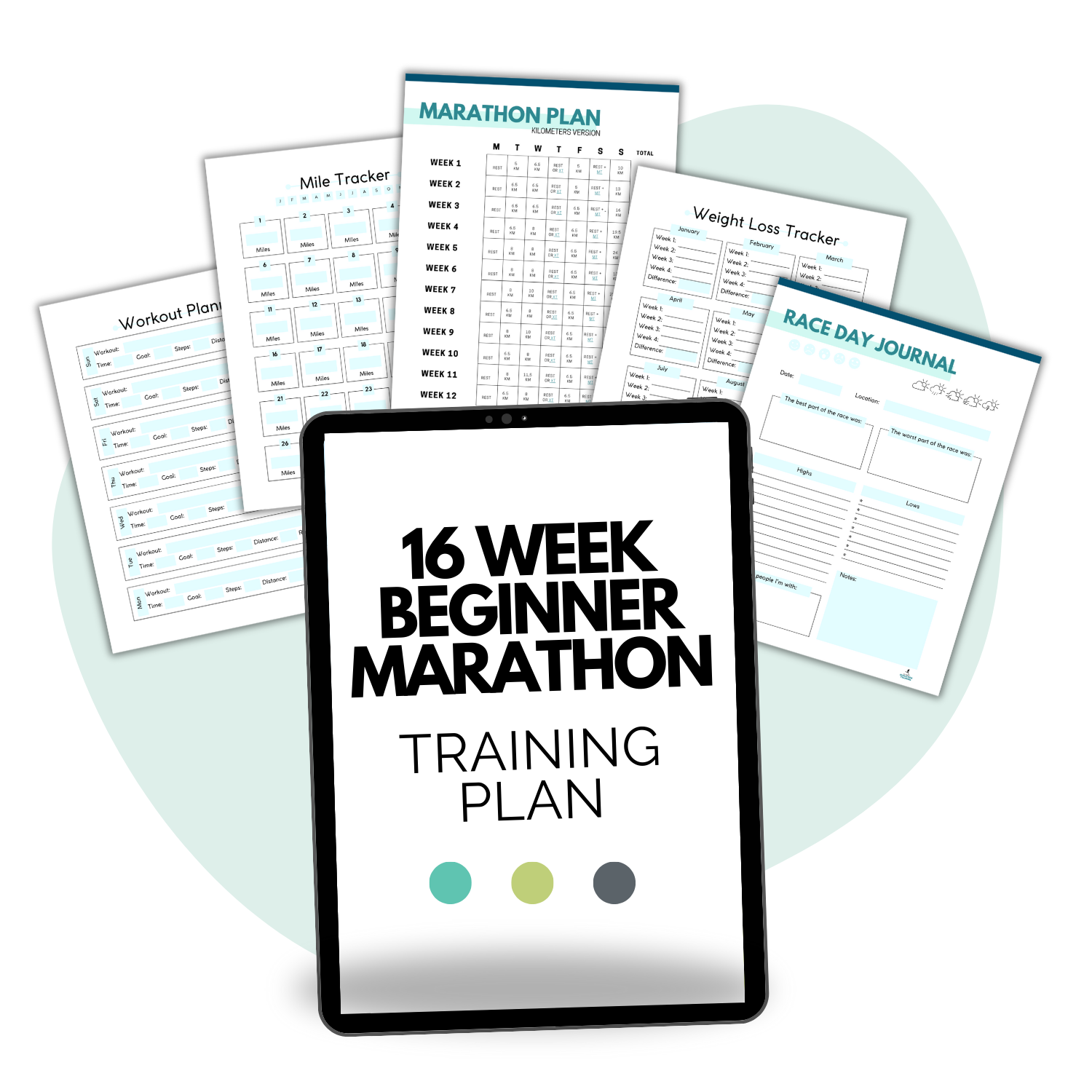
Sign up below to get the free pdf download that comes in miles and kilometers or choose the paid version for extras!
Free Version
Just need the training plan?👇
Related Pages:





About this marathon training plan
This plan is built on 18 years of running experience and 12 years of coaching runners of all levels.
With a background in Kinesiology and Exercise Science — plus six completed marathons — the training principles behind this schedule are grounded in both real-world experience and how the body actually adapts to endurance training.
Over the years, this approach has helped thousands of runners train smarter, stay healthy, and confidently cross their first marathon finish line.
The focus of this plan is simple: gradual progression, proper recovery, and sustainable mileage — so you can build endurance without burnout and arrive at race day prepared.
- Home
- Marathon Training Schedules
- Beginner 16week Marathon Training Schedule
As featured on:

Search this site:

Hi I'm Molly! I'm a Kinesiologist here to help you with your marathon training! Whether you need a half marathon plan
or a marathon training plan, I have you covered.